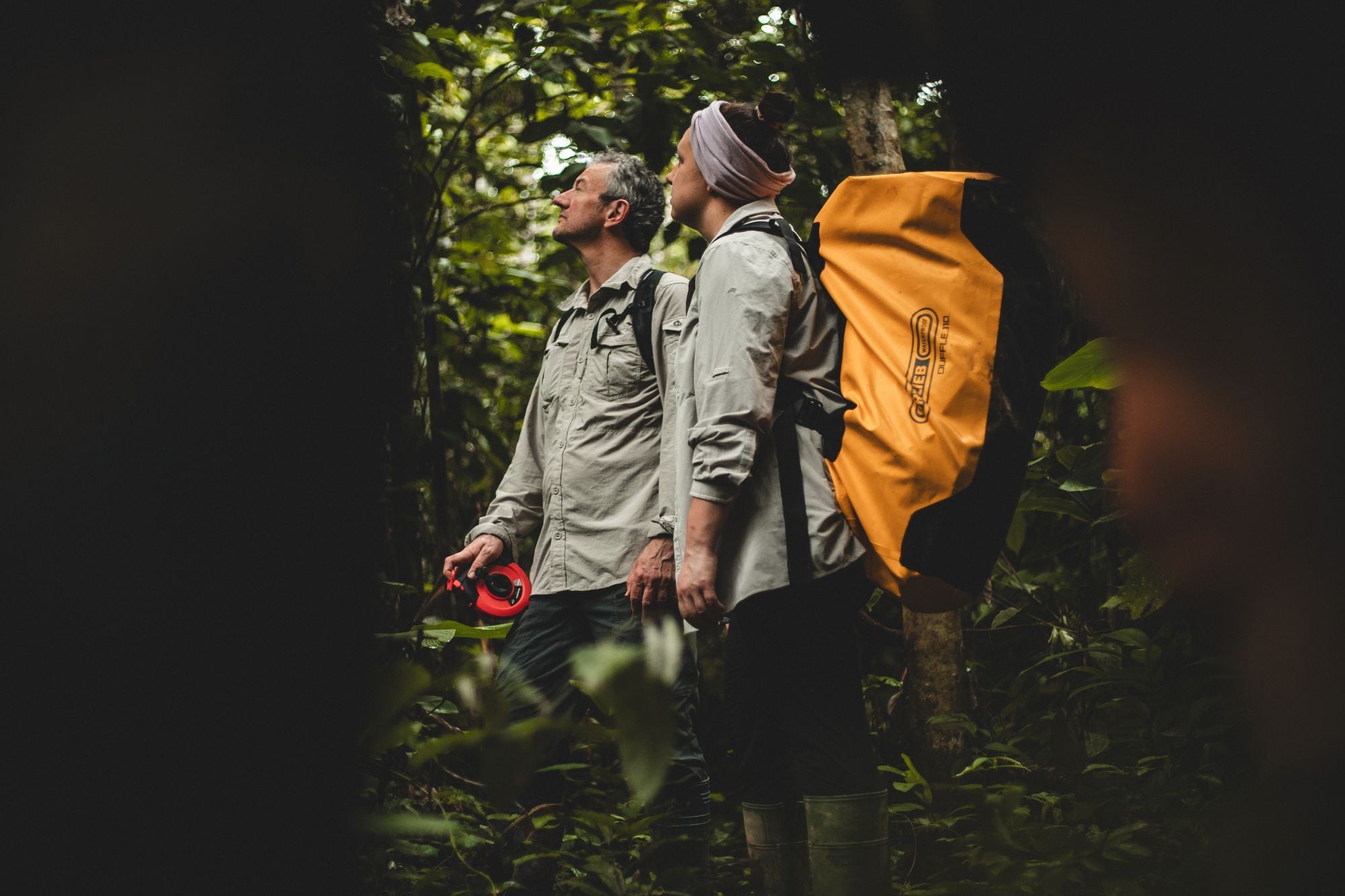
ORTLIEB supports Wilderness International in its ambitious goal: to preserve ecologically valuable and critically endangered wilderness areas for all time. The Wilderness International Foundation purchases wilderness areas with legal certainty through land registry entries and protects them for the future.

Since 2022, ORTLIEB has been partnering with the Wilderness International foundation on a joint mission to protect the Earth's last remaining intact primary forests.

For years, we have been supporting Wilderness International with waterproof products for their expeditions to Canada and Peru.
Since its founding in 2008, Wilderness International has protected 7.57 million square meters of land.
For every order of €120 or more in the German webshop, ORTLIEB protects one square meter of the ORTLIEB Forest in Canada.
The wilderness areas protected by ORTLIEB in the temperate rainforest are located on Porcher Island on the Canadian West Coast. This region is the most biodiverse ecosystem in the Northern Hemisphere. Its ancient, towering trees provide a safe habitat for an incredible variety of animal and plant species.
Why? - Because it's urgent.
Only 2.8% of habitats remain intact
Only 2.8% of intact habitats worldwide can still be preserved. Every year, we lose an area the size of Great Britain due to deforestation, clearing, and forest fires, for example.
The Amazon will soon be beyond saving
According to recent studies by the WWF, 13-17% of the Amazon rainforest has now been irretrievably lost. The discrepancies are due to differences in the underlying data. The tipping point at which the Amazon can no longer be saved and will die is expected to be 20-25% forest loss.
We depend on biodiversity
Forests are not only important CO₂ reservoirs, they also provide habitats for thousands of different animal and plant species. Without the biodiversity of these habitats, important cycles on which we also depend would cease to function.
Deforestation is five times worse for the climate than flying
The world's forests bind as much CO₂ as is present in the atmosphere. With rising emissions and declining forest area, this equation will no longer add up in the future. The massive destruction of forests and forest bogs currently accounts for 10–15% of all annual emissions. This means that the loss of forest area has almost five times as much impact on the atmosphere as global air traffic. Protecting forests therefore has far-reaching implications for the climate.
Why protect old forests instead of planting new ones?
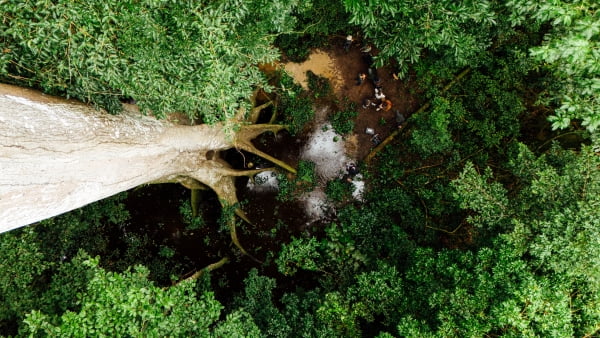
Rainforests have ancient trees. These have grown over hundreds of years. The biomass of these forests is correspondingly much greater than that of young trees. When trees are planted, CO₂ is emitted for the first 20 years before it is stored. It is also very important to protect old habitats in order to halt species extinction.
How does Wilderness International operate?
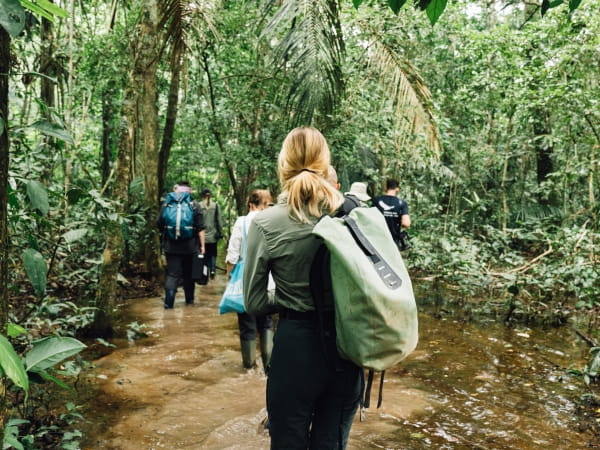
The Wilderness International team searches for intact forests in Canada and Peru that are both available for purchase and threatened by human activity. They then purchase these areas, which remain in the foundation's possession. Only after the purchase do they collect donations for the area. This ensures maximum transparency. Each square meter is worth a €1 donation. This means that every euro donated can be tracked precisely to a square meter. Each donor receives a link with the coordinates of their square meter. You can give your square meter its own name. No square meter can be assigned twice. Wilderness International has already received awards for this type of transparency.
Would you like to learn more about the transparency of Wilderness International?
No trading in CO₂ certificates
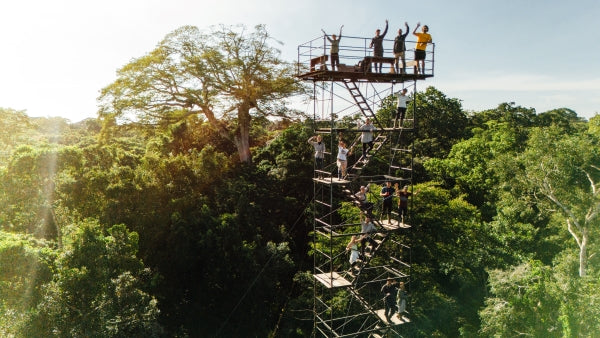
Wilderness International has also researched how much CO₂ is stored on average per square meter. The result is impressive: at least 60 kg CO₂/square meter. Accordingly, a piece of forest in which 1 ton of CO₂ is stored costs €16.70.
It is important to note that Wilderness International does not participate in the controversial CO₂ certificate trade, but offers this perspective as additional information. Like us, Wilderness International has taken a stand against the current trading of CO₂ certificates, as this is not yet regulated and is often criticized as greenwashing.
Rainforests have ancient trees. These have grown over hundreds of years. The biomass of these forests is correspondingly much greater than that of young trees. When trees are planted, CO₂ is emitted for the first 20 years before it is stored. It is also very important to protect old habitats in order to halt species extinction.
The Wilderness International team searches for intact forests in Canada and Peru that are both available for purchase and threatened by human activity. They then purchase these areas, which remain in the foundation's possession. Only after the purchase do they collect donations for the area. This ensures maximum transparency. Each square meter is worth a €1 donation. This means that every euro donated can be tracked precisely to a square meter. Each donor receives a link with the coordinates of their square meter. You can give your square meter its own name. No square meter can be assigned twice. Wilderness International has already received awards for this type of transparency.
Would you like to learn more about the transparency of Wilderness International?
Wilderness International has also researched how much CO₂ is stored on average per square meter. The result is impressive: at least 60 kg CO₂/square meter. Accordingly, a piece of forest in which 1 ton of CO₂ is stored costs €16.70.
It is important to note that Wilderness International does not participate in the controversial CO₂ certificate trade, but offers this perspective as additional information. Like us, Wilderness International has taken a stand against the current trading of CO₂ certificates, as this is not yet regulated and is often criticized as greenwashing.
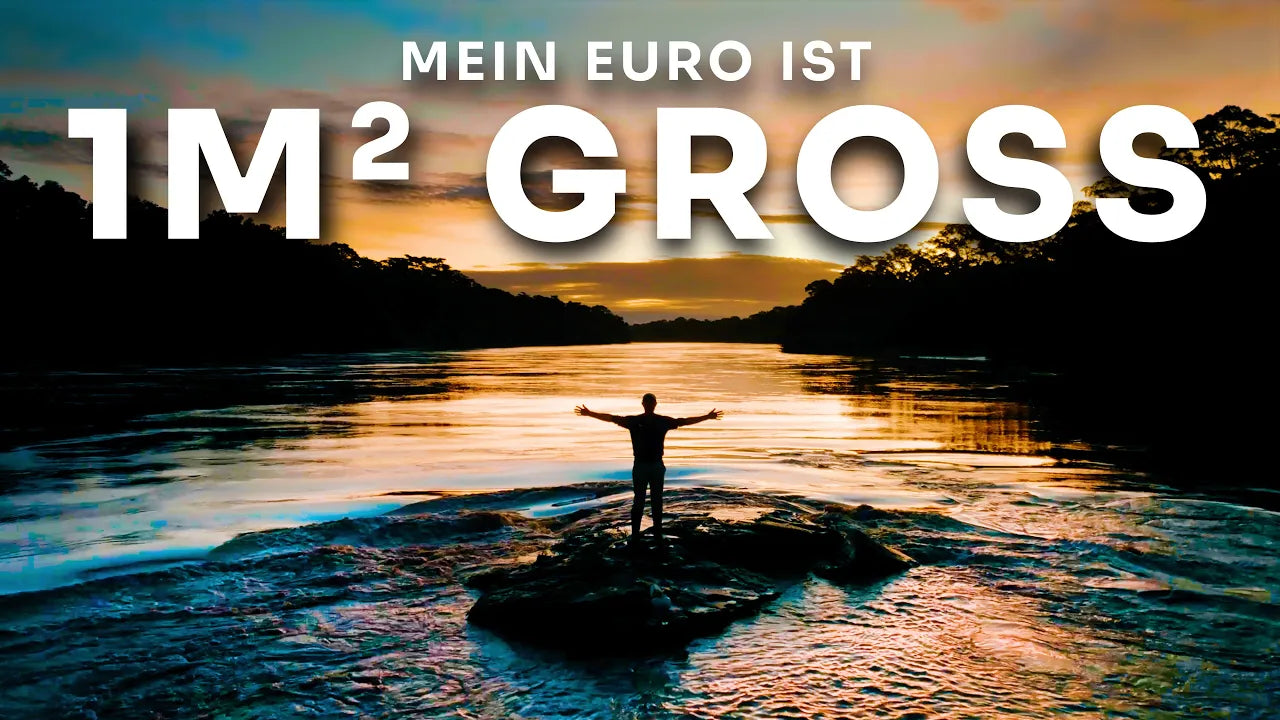
1 euro = 1 square meter
Each euro covers the purchase price per square meter, as well as the payment of gamekeepers and the costs of research in the area. This allows the forest to be effectively protected. €1 sounds like very little. However, only a few gamekeepers are needed for many square meters. This means that sufficient money is available to protect the area.

Area of operation: Canada
In western Canada, an area of temperate rainforest borders the Pacific coast. The temperate rainforest is a unique ecosystem. Its primeval forests are home to a unique biodiversity and giant trees that are thousands of years old. Rare ghost flowers are at home here, as are bears, wolves, and eagles, and gigantic jungle giants such as maple trees, Alaska cedars, Douglas firs, and giant arborvitae trees, up to 2,000 years old and 100 m high.
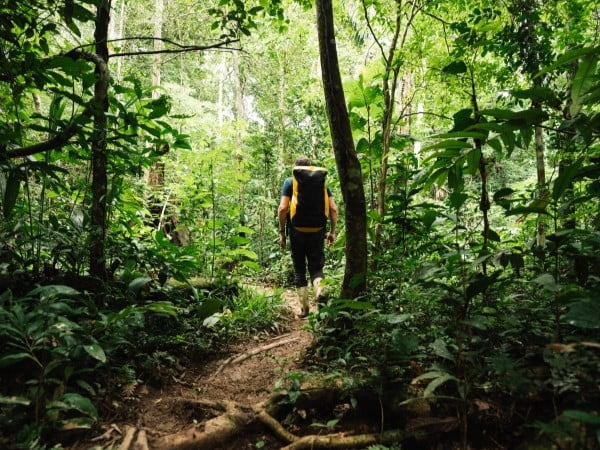
34% of Canada is covered by forest, 53% of which is virgin forest
The forests in our protected areas are absolute champions at storing CO₂ and are one of the most important “sinks” in the Earth's carbon cycle. They also make an important contribution to cooling and purifying the air and to water storage.
Hardly anyone talks about British Columbia's forgotten ecosystem
It is home to the last large contiguous area of temperate rainforest in the world. And yet British Columbia is one of the last jurisdictions in the world that continues to allow large-scale logging of 600- to 1,800-year-old giant trees. Between 2003 and 2010, deforestation in British Columbia was responsible for higher annual CO₂ emissions than those of Finland as a whole. The main causes are the timber industry, agriculture, and infrastructure construction.
Would you like to support Wilderness International directly?
Join us in saying “thank you” to nature and protect your own personal piece of rainforest in the ORTLIEB Forest on Canada's west coast with your donation.
Further information
More information about the protected area in Canada, current figures on square meters already protected, and the ORTLIEB Forest can be found here: